

The criticism credo of Dear Head of Mine is generally not to review books that aren’t worth your time to read.1 Today we make an exception.
Elisabeth, originally written in 1946, translated into English and published for the first time this year, is by the famous French New Wave film director Eric Rohmer who is no longer with us.2 Like editor Jake Morrissey and writer Marlon James’ wonderful book podcast Marlon and Jake Read Dead People,3 the author in question being dead gives us greater latitude to ignore the never-be-negative conundrum of modern book publishing. It lets us talk about something anyone in or around the book business knows but often only says after a few drinks with another insider: the difference between a good book and a book that’s published well.
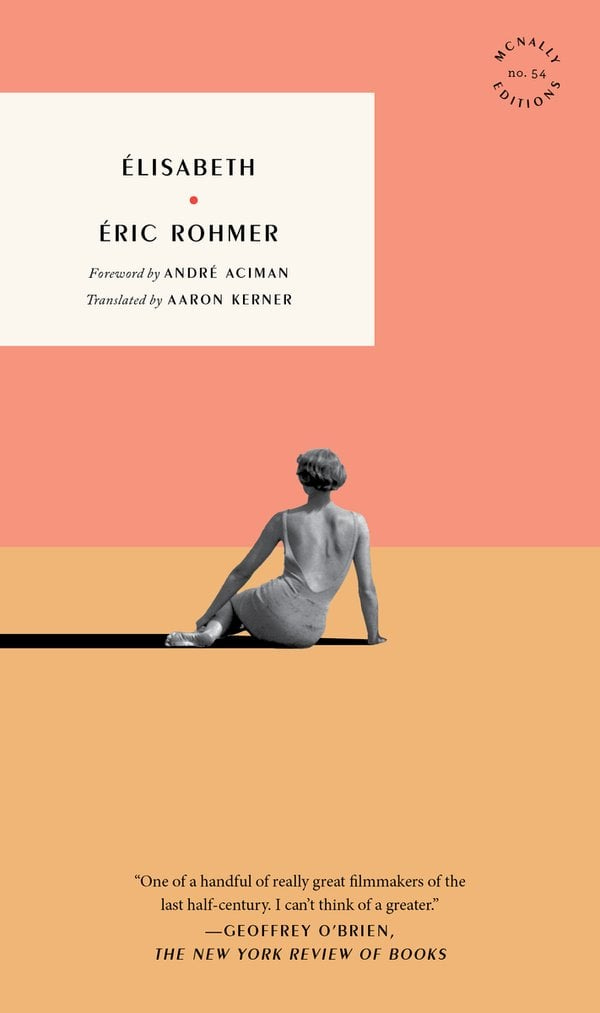
Editing is about literary taste, and it is also about publishing. “Publishing,” no matter how you want to dress it up, is a more artful way of saying “marketing and advertising.” That’s an editor’s job: half to make a book art, half to figure out how to advertise it so that people read it. In an ideal world great art is married with great advertising and it makes the book a giant, world-beating success that readers love and everyone admires. Jurassic Park is an exceptional novel, has one of the most iconic book covers of all time, and was turned into an even more beloved and bigger blockbuster film.
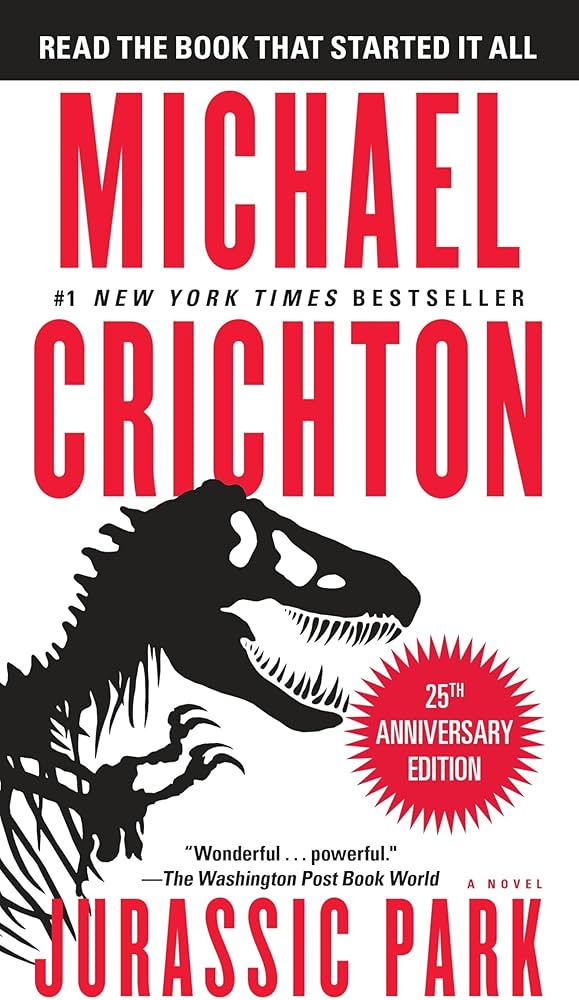
But some editors don’t get by on their literary taste, and some books don’t either. Some books are all about the publishing, selling the concept and the author hard, and laughing all the way to the bank as disappointed readers hold the bag. However, before we talk about why Elisabeth is published so well, let’s quickly get why Elisabeth is not a good novel out of the way.
Bad Book
You should not be fooled by Elisabeth’s publishing. You should only read this book if you’re a writer wanting to learn what not to do. Or you might read it as a semi-inspiring reminder that plenty not particularly good books can get published and be published well such that they are commercially successful (but still not any good).
The problems with Elisabeth all fall under the umbrella of Rohmer being a filmmaker, not a novelist, as well as a young man— he wrote Elisabeth in his early 20s — who is overconfident in their artistic point of view (a trait of many filmmakers, it must be said). Rohmer has every hallmark of what happens when a screenwriter attempts a novel and doesn’t adjust to the form. As an editor you read many novels, usually unpublished, like Elisabeth— it’s not, generally, that these people don’t have the talent to write, just that they haven’t studied or practiced writing novels enough to redirect their writing talents. Let’s dispatch these faults quickly so we can move on. First a quick book description for grounding: “A summer seduction set on the eve of World War II.”
#1
Elisabeth has the classic tennis match dialogue that is often necessary in a screenplay but can be entirely inane in a novel:
“What a fucking mess,” howled Moulet. “Wed have done better to go by way of the river, wading. Son of a—”
“Virgin!” Bernard interrupted.
“What?” said Moulet. Then gave a raucous laugh.
“All I’m saying,” he went on, as they reached the second meadow, which was narrower and greener than his first, “is that if I were in your shoes, I’d give it a shot.”
“Well, if you’re such a lady’s man, why don’t you give it a shot? What’s stopping you? Go on!”
“Me?”
“Yeah, go ahead. Go on and join them up there, make your move. I’m certainly not stopping you, am I? What are you waiting for?”
“Idiot,” said Moulet. He grabbed Bernard by the arm.
“Hey, check out those ones over there, behind the trees. See: in the red and blue swimsuits. There!”
“Who are they?” said Bernard. “Do you know them?”
“It’s possible, I can’t quite see. What’s your opinion?”
“Not bad, not bad. Stupid faces. But still!” He made a gesture. “Are they local girls?” Bernard asked.
“What else? Local girls: I call them ‘the concierges” daughters? There’s nothing I hate more than the concierges’ daughters. Emphasis on the con. But what the hell!... Yes, they’re all stupid, stupid. Can’t get them out of my head, though.”
“What do they spend their time doing?”
“Who knows. Every Saturday they stroll along the boulevard with those twerps who work in the shops, it’s all very sweet and decent. The rest of the time they’re bored stiff, poor things!”
#2
When Rohmer lets the descriptions breathe, finally, unfortunately the novel doesn’t improve much. The scenes are over described in a way that feels like a director pointing his camera at each element. Lincoln Michel does a great job of exploring why this style is tedious and not ideal for novelists in his essay “Turning Off the TV in Your Mind.”
Irène seemed not to hear them; gazing down, she continued to break off crumbs of bread with her nails and send them rolling across the tabletop with little flicks. She certainly wasn’t listening; the gray-pink evening light had softened and refined her features. Despite having her hair pinned back far too tightly, she looked quite young now. She raised her eyes; her gaze met his for a moment, then dropped again. She was beautiful, very beautiful; suddenly he remembered something he’d said to her once, or that he’d wanted to say: “You were lovely just now, so lovely that it was impossible to imagine anyone lovelier.” But he knew well enough it was just the evening light that had given her face its temporary air of sweetness, of weariness.
#3
In total, the subject matter of Elisabeth feels like a classic instance of preoccupations of a young man style storytelling. Not being a cinephile enough to have seen any of Rohmer’s films, it is just an educated guess that the same themes of Elisabeth preoccupy some if not all of his films. But it’s much easier to get a viewer to care about good looking young people trying to sleep with each other by the beach when you can put the good-looking people and the beach on camera. However, to watch men think (reminder: avoid “thoughts” in fiction) how much they hate their girlfriend, or chase girls often described as “looking like they’re sixteen” hasn’t aged well on the page.
Good Publishing
"Even an editor buys a book often because it reminds them of something else they loved reading.”
Published by McNally Editions, an imprint of the influential and successful New York City bookstore McNally Jackson, Elisabeth is a masterclass of good publishing. I purchased Elisabeth after walking into a McNally Jackson and seeing it on their store’s bestseller shelf— whether or not it was actually the #1 bestseller in the store is dubious, but it wouldn’t be surprising if it were true.
It was a reminder that even an editor buys a book often because it reminds them of something else they loved reading — a look and other surface level similarities. This was a rare impulse purchase for me because so much of its copy and packaging was reminiscent of Last Summer in the City by Gianfranco Calligarich, an old novel recently translated that has sparked a minor obsession.4 They are both translations from the mid 20th century never seen before in English about a tumultuous relationship published by a prestigious imprint and packaged as a modern classic to read in the summer.
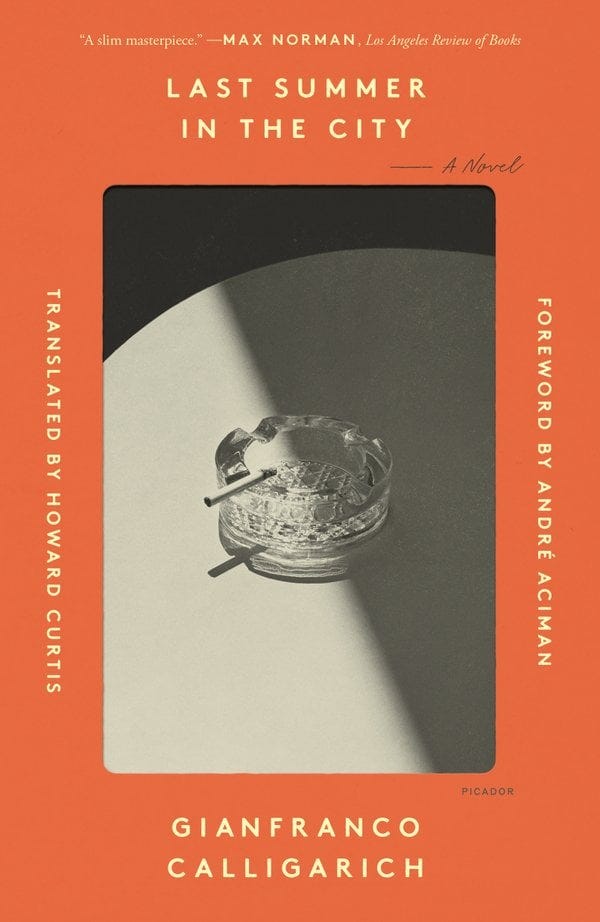
This is the essence of publishing and why every thriller has a house on it and every romance novel has two illustrated people smirking at each other and every literary novel, for a while, was a blob of abstract colors: we’re trying to remind readers of a book they already loved. It’s why the same joke in every cover design meeting is “make it look like every other big bestseller, but completely original and fresh!”
A List of Good Publishing Choices
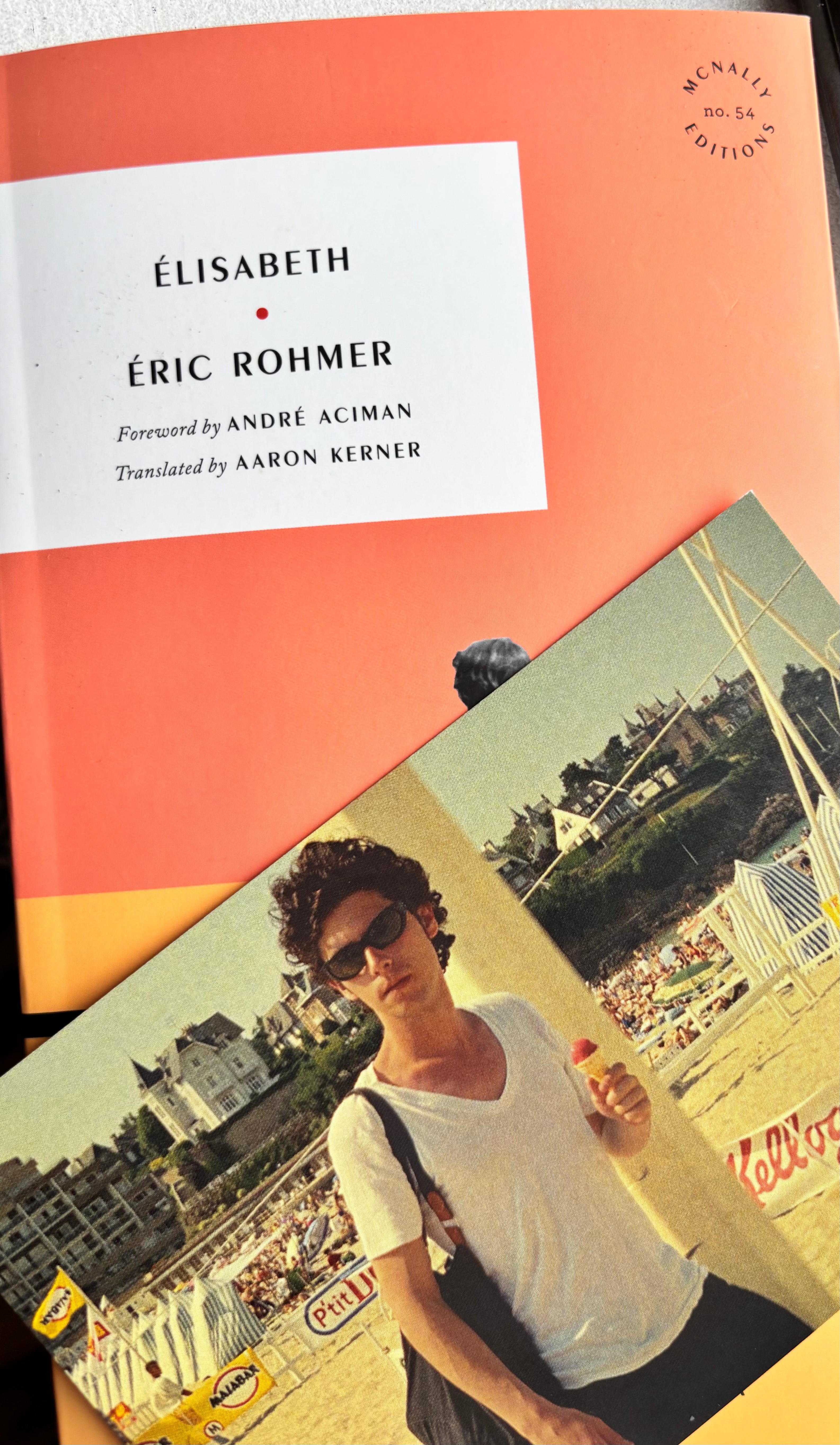
“Was it cool when the bookseller tucked a postcard made by The Criterion Channel of one of Rohmer’s movie stills at checkout? Your damn right it was.”
Design
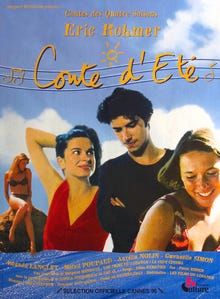
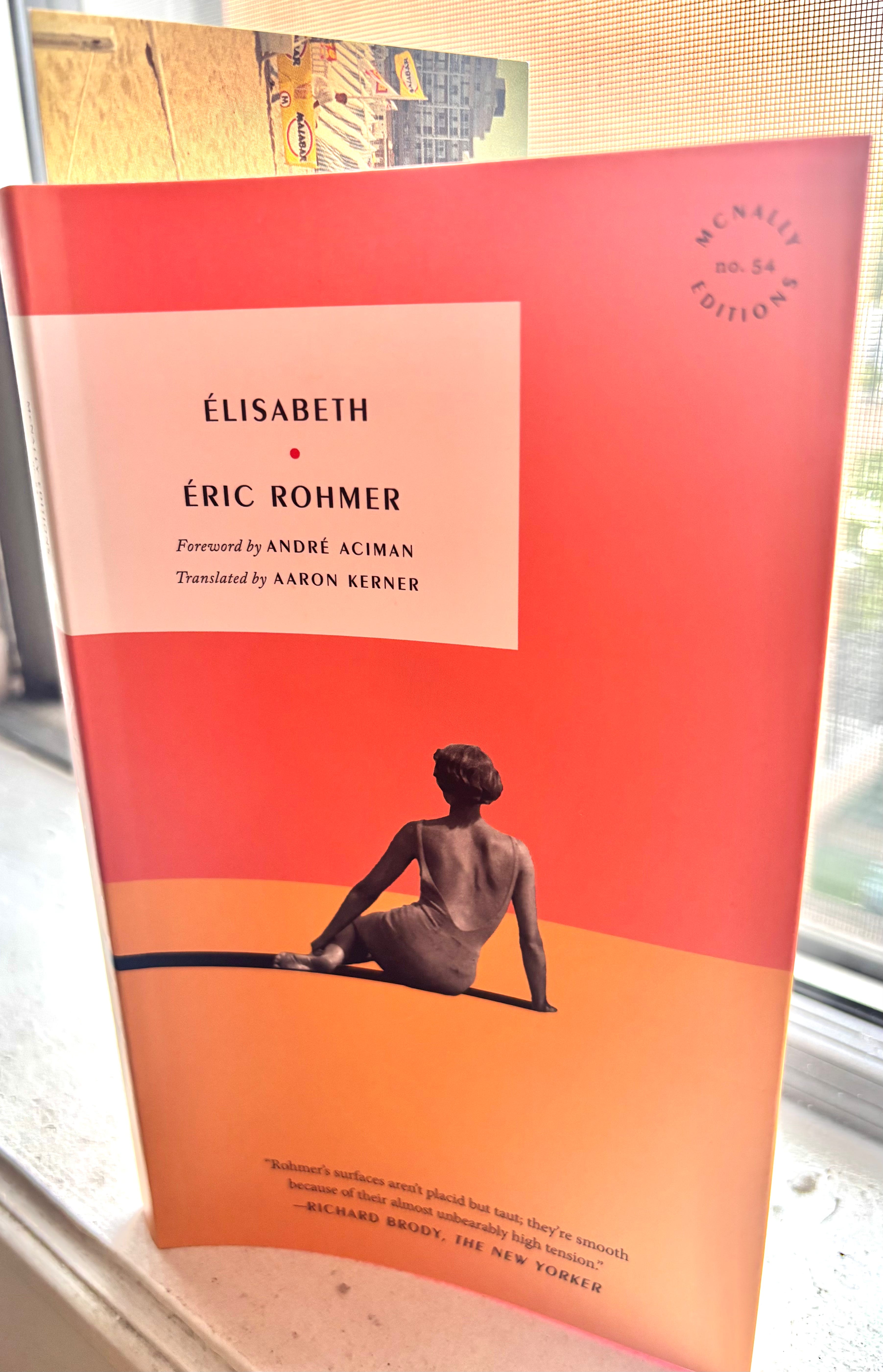
The cover design of Elisabeth is A+ brilliant with a creamsicle summer color scheme that is par excellence. Putting a moody female figure on the cover is laser targeted at the typical literary fiction reader. The “French flaps”— has to be for a French filmmaker— along with colored endpapers and heavy paper stock are all strong signals of a classic.
Selective Praise
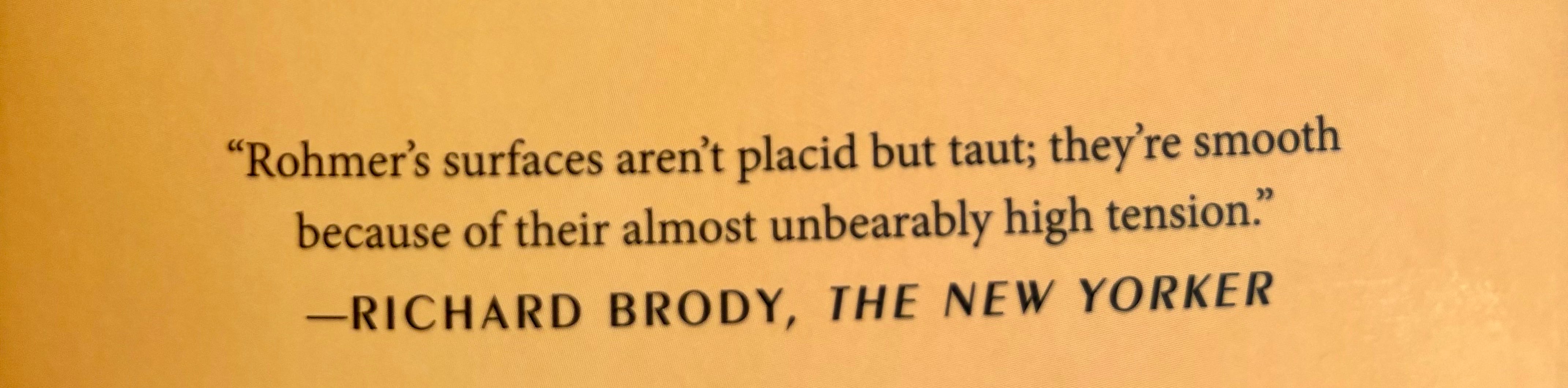
Something a book buyer might not notice until they actually read the book is that all of the glowing praise on the book jacket is for Rohmer as a filmmaker, not as a writer...
Team Up With a Tastemaker
Was it cool when the bookseller tucked a postcard made by The Criterion Channel of one of Rohmer’s movie stills at checkout? Your damn right it was. It’s not exactly rocket science: getting another cool company or cool person to endorse your product makes it cool. Books are objects of status and personality and a Criterion Channel postcard was a cheap, effective, and clever way to further signal this was a novel for the type of person who lives in Brooklyn and shops at Independent bookstores.5
Keep the description short!
If publishing is advertising then editors are best to remember that the best ad copy is incredibly simple. “The best part of waking up is Folgers in your cup” or Gillette’s dynamite “The best a man can get.”
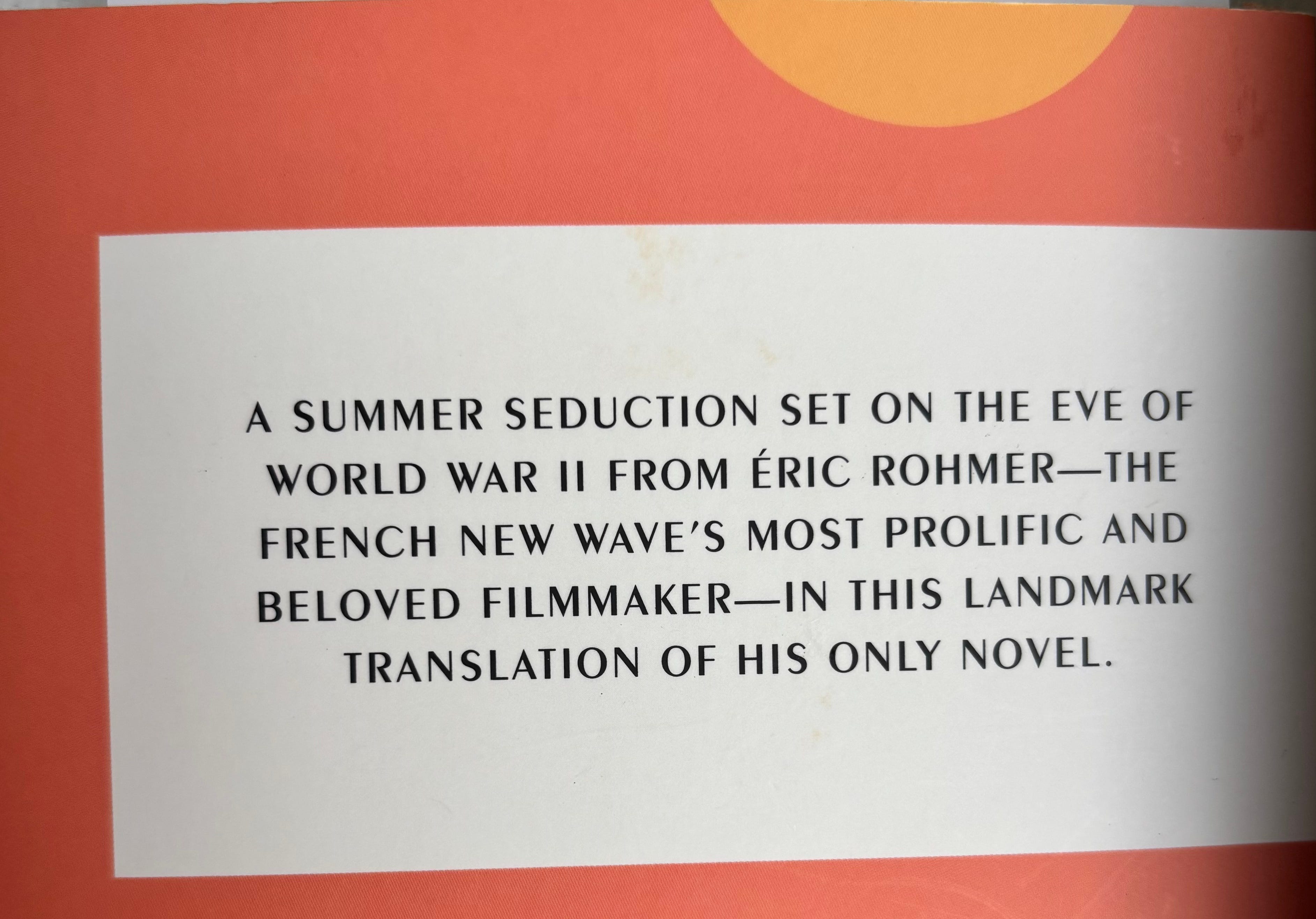
The entirety of the book description for Elisabeth is one long sentence and hits every single pleasure point for why a reader might want to purchase the book.
Suggestions for Further Research
If you want other examples of books whose publishing might have outstripped their quality, go back and revisit the list of most important books of the decade for many prime examples of where the publishing is as good as, if not better than, the actual book. This is not an insult to their quality, but an observation that the more of a commercial juggernaut something is, the greater the chance that the packaging and messaging is carrying the day rather than what’s actually in between the two covers. And then go gossip among yourselves about which books from living authors have excellent publishing but aren’t very good.
Worth your time reading not to be mistaken for a full-throated endorsement.
For formatting reasons the accent mark of Elisabeth and Eric have been omitted.
Back now after a long hiatus, presumably to help publicize James’ new book, nominated for the Booker Prize before it even publishes. The podcast is excellent, they are charming, smart and have great rapport. It exemplifies some issues around having consistent book related discourse but that’s a newsletter for another day.
I’ve re-read it every year since discovering it, and even made my book club read it, too. I’ve mentioned it in three separate newsletters according to search. Make it four.
Guilty as charged.
I’m glad you posted this because I would have absolutely 💯 bought Elisabeth if I saw it at a bookstore, without even cracking it open, based on the cover alone. But I also appreciate that you save bad reviews for very old books.
Also I love the movie Jurassic Park but never read the book—so I’ll pick that up next time I’m in the bookstore! (Which will be any minute now because…bookstores)
Eric Rohmer only started writing and making films at 30. He famously made his first feature length film just before he hit 40. I'm not sure the dates add up in your post!